
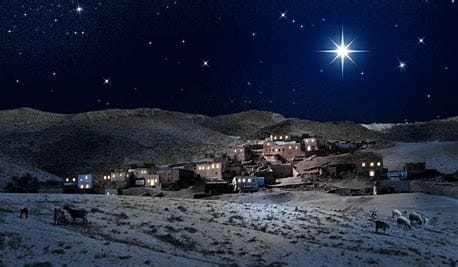
What Christmas Is All About
In what may seem like a strange way to start off a Christmas Eve message in a Baptist Church, here is a song written by poet and songwriter Peter Sinfield and sung by Greg Lake, of the legendary band Emerson, Lake, and Palmer, and released in 1975.
They said there’d be snow at ChristmasThey said there’d be peace on EarthBut instead it just kept on rainingA veil of tears for the Virgin birthI remember one Christmas morningA winters light and a distant choirAnd the peal of a bell and that Christmas tree smellAnd their eyes full of tinsel & fireThey sold me a dream of ChristmasThey sold me a Silent NightAnd they told me a fairy story’Till I believed in the IsraeliteAnd I believed in Father ChristmasAnd I looked at the sky with excited eyes’Till I woke with a yawn in the first light of dawnAnd I saw him through his disguiseI wish you a hopeful ChristmasI wish you a brave New YearAll anguish pain and sadnessLeave your heart and let your road be clearThey say there’ll be snow at ChristmasThey say there’ll be peace on EarthHallelujah! Noel! be it Heaven or HellThe Christmas you get you deserve
That song is a tragic, heart-rending little ditty, full of darkness and doubt, fueled by the author’s disillusionment with his own tarnished ideals of Christmas. Apparently he thought as a child that Christmas was all about snow, and Santa, and Christmas carols, and Christmas trees, and Christmas tinsel, and Christmas bells. He seems to have thought that Christmas was all about an unusual birth, and a little baby boy whose primary purpose was peace on earth, and kindness and generosity and joy. We all thought that way, the way the world taught us to. I totally get why he wrote one of the most bitter, disappointed, cynical, and unbelieving Christmas songs ever.
You see, Christmas isn’t about snow, or Santa, or Christmas trees, or Christmas tinsel, or even Christmas bells or Christmas carols (although there’s nothing wrong with any of those things, and all kind of right). Christmas is not even about Mary or Joseph, nor the fact that Mary was a virgin when Jesus was born (altho she most certainly was). Christmas is not even primarily about peace on earth, altho eventually, and inevitably, worldwide peace and kindness will be the glorious outcome of that first Christmas.
The apostle John tells us what Christmas is all about in the first chapter of his gospel. He knows what we often forget: if you want to know what Christmas means, you first have to know who Christ is. If we want to understand the significance of Jesus’ birth, we must first take care to understand the significance of his life. Who was that man, Jesus of Nazareth, who started his human life in a manger in Bethlehem? Listen to John’s answer in the first chapter of his gospel…
In the beginning was the Word, and the Word was with God, and the Word was God. He was in the beginning with God. All things were made through him, and without him was not any thing made that was made. In him was life, and the life was the light of men. The light shines in the darkness, and the darkness has not overcome it.• • • •And the Word became flesh and dwelt among us, and we have seen his glory, glory as of the only Son from the Father, full of grace and truth.
What is Christmas all about? John says that Christmas is all about the incarnation of the living Word of God. John says that the Onlybegotten, the one true Son of the one true God [[ ]] took on human flesh, and became a human being. God became [[ ]] a man. That’s what Christmas is all about. John says, “The Word became flesh and dwelt among us.” He mentions three specific subjects on the topic of the Incarnation: a person, a process, and a purpose.
First, there was a person involved in the Incarnation. John says, “The Word became flesh.” Jesus, the living Word of the living God, is the person of the Incarnation. Some of you, I’m sure, are wondering why John would call Jesus “the Word” here in the prologue to his gospel.
A word is a thing that represents or reveals or communicates an idea or reality, and makes it understandable to the reader. And that’s exactly who Jesus is. He is – and has been, from eternity past – the Second Person of the Trinity, the eternal Son of the Father, who reveals and represents the Father, making him understandable to those he has created.
None of God’s creatures – not we humans, not even the angels of heaven, can begin to hope to grasp, or even gaze upon, the full glory and majesty and splendor of God the Father. We need God the Son, Jesus, to communicate and reveal the Father to us, to make him understandable to us.
That’s not even close to the end, or the beginning. Well before the creation of the material universe, before there was even an angel, there was only God: Father, Son, and Holy Spirit, living in splendid solitude and perfect fellowship outside of time. Even then, before the beginning began, when God was all there was, the Word already was, and the Word was what God was. The way Jesus said it while he was living here among us was, “before Abraham was, I am.” The Son, the Word, the Image of God was the eternal God’s eternal concept of himself. Not just an idea, he was the second person of the Godhead. That’s who was born in Bethlehem always years ago.
John will say in just a few verses that no one has ever seen God, but his only-begotten Son has made him known. Jesus is the living Word of God. He is the person of the Incarnation.
John mentions not only the person, but also the process involved in the Incarnation. He says, “The Word became flesh.” And after all, that’s what the word “incarnate” means: to make a spiritual thing physical; to give it flesh. What happened in the stable that night in Bethlehem was this: God incarnate was born into the world. That’s the heart and center of what Christmas is all about; indeed, it’s the fundamental fact of what Christianity is all about. In the person of Jesus of Nazareth, God became a man.
“Well, preacher, can you explain, please, how God could become a man?” Nope. Can you? Does it even make sense to think we might be able to understand or explain something like that? I’ll tell you this much, though. If you’re going to complain about a Christmas miracle, don’t waste your breath griping about the Virgin Birth. That was just a parlor trick, compared with the Incarnation. Tell me that a virgin had a baby, and I’ll be impressed. But tell me that God became a man, and I’m utterly dumbfounded. I simply have no hope of ever comprehending it, much less explaining it. So I just believe what God says: that in the man Jesus, born in Bethlehem, brought up in Nazareth, all the fullness of the Godhead dwelt bodily… and that it happened through the process now known as the Incarnation.
In speaking of the Incarnation of Jesus, the Word of God, John has shown us both the person and the process involved in the Incarnation; now we must consider for a moment that there was a purpose involved in the Incarnation. John says, “The Word became flesh and dwelt among us.”
Did you catch that? He made his dwelling among us! He became one of us, not for a moment, nor for a minute, nor for a day, nor even for a decade. He lived a lifetime as one of us! So why did he do it? He did it for God and he did it for us.
The Son of God became a son of man in order to satisfy the justice of God. You see, it took a man to die for the sins of man, because (Heb 10:4) “it is impossible for the blood of bulls and goats to take away sins.” He had to be born and live as one of us before he could die and rise again for all of us. And yet, to be an acceptable offering for sin, the Sacrificed One had to be spotless. Dying for the sins of another would take a sinless man living a life of flawless obedience to the law of God. A man was required, but no mere man would do.
And yet there’s more! To be the offering for the sins of us all, millions upon billions of us, the Sacrificed One had to be limitless. Which means he had to be God. It would take a man to save man, but it would take God to save mankind. And so, out of his own great love for sinners, in order to save us from his own great wrath against sin, God became a man. The Son of God was born as one of us, lived as one of us, and died as one of us, for God.
And still there’s more. The English word “dwelt” translates a Greek word that literally means “pitched his tent.” John chose that word intentionally to call to the minds of his first readers, faithful Jews like him, the Tabernacle in the wilderness, with the brilliant glory of God blazing inside and towering above in a pillar of cloud by day and fire by night. The God of Israel, in all his glory, was literally inhabiting that tent. That’s why the rest of this verse speaks of the glory of God in Christ. The Incarnate Word of God pitched his tent among us to show us the glory of his father in human form. He did it for God.
Yet he also did it for us! You see, the Word didn’t need to become one of us in order to know how we felt. He already knew everything; he was God! Rather, he made his dwelling among us so that we could know him, and touch him, and see first-hand that he felt what we feel! The Son of God experienced the life of man so that the sons of men might experience the life of God.
He experienced our life in his cradle. Lying there in all the helplessness of infancy, totally dependent on Mary for the meeting of his every need, he experienced our life. He experienced our life in his childhood. Leaping and running with the other boys, or learning the ways of wood from his carpenter Daddy, or submitting to the loving authority of his devout Jewish parents, he experienced our life.
He experienced our life in his craftsmanship. Working by the sweat of his brow to wring an honest living out of stubborn timber, he experienced our life. He experienced our life in his compassion. Whether he was healing a leper with a hug or pronouncing forgiveness upon a repentant prostitute, or giving sight to a man born blind, or groaning within over the pathetic confusion of the masses, he experienced our life. He experienced our life in his crucifixion. On that cross he tasted the sorrow and the agony and the fear and the loneliness of death. He experienced our life by experiencing our death. We know he feels the sting of death because death stung him.
We can imagine that as God, long ages before he was born in Bethlehem, when he existed as the eternal, uncreated Son of God, dwelling in all the splendor of heaven, he knew what we felt. But when we saw him born in a barn that first Christmas morn, when we saw him live as a laborer those thirty-three years, when we saw him grieve at the grave of a well-beloved friend, when we saw him die in the darkness that first Good Friday, we saw that he felt what we feel. And we knew we could trust him.
He experienced our life. He “made his dwelling among us,” that he might show us beyond all question or doubt that he is an apt, fit, utterly lovely, supremely sufficient Savior for sinners. He came for us, just as he came for God. That is the purpose of the incarnation.
Since we started this talk with such a strange introduction, I suppose it’s only fitting that we end it with a strange conclusion. How about another sacrilegious-sounding song off of the secular radio? The song is called “One of Us.” It’s written by Eric Bazilian and sung by Joan Osborne. It was a major hit around the world in 1995. Listen to these words, and weep:
If god had a name, what would it be?And would you call it to his faceif you were faced with him in all his glory?What would you ask if you had just one question?And yeah, God is great.Yeah, God is good.Yeah.What if god was one of us,just a slob like one of us,just a stranger on the bus trying to make his way home?If God had a face, what would it look like?And would you want to seeif seeing meant that you would have to believein things like heaven and in Jesus and the saintsand all the prophets?And yeah, God is great.Yeah, God is good.Yeah.What if god was one of us,just a slob like one of us,just a stranger on the bus trying to make his way home?Just trying to make his way home, just like a holy rolling stone?Back up to heaven all alone…
If only Eric Bazilian knew what Christmas is all about! He would know that God was one of us. He became one of us 2000 years ago, and still is one of us today. This very hour God the Son sits beside God the Father, holding forth his nail-scarred hands as proof that the sin-debt has been paid, and that there is mercy and forgiveness for all who repent.
And if only Joan Osborne knew what Christmas is all about! She’d know that God the Son does have a face, and that his face is raven-haired and ebony-eyed and brown-skinned like an Arab’s (or a Jew’s), and that there are scores of tiny scars all across his forehead and scalp – almost as though someone had forced some kind of thorny crown down onto his head at some point in the past. And she’d know that that face gleams with the glory of God and glimmers with grace and mercy and love for all who believe.
If only they knew what Christmas is all about! Then they’d know that God does have a name, and that they even spoke that name in their song. The name of God the Son, the living Word of the living God who was incarnate as one of us. . . is [[[ ]]] Jesus. He doesn’t know what it’s like to be a slob, but he does know what it’s like to be a grimy, sweaty laborer, and he does know what it’s like to be grindingly, devastatingly alone in agony and death. He knows what it’s like to be one of us, because he is one of us.
Therefore, since we have a great high priest who has gone through the heavens, Jesus the Son of God, let us hold firmly to the faith we profess. For we do not have a high priest who is unable to sympathize with our weaknesses, but we have one who has been tempted in every way, just as we are – yet was without sin. Let us then approach the throne of grace with confidence, so that we may receive mercy and find grace to help us in our time of need.
Jesus is an apt, fit, utterly lovely, entirely desirable, supremely sufficient Savior for sinners. What is more, he is the only Savior for sinners. Don’t stay away from him one moment longer. There is no better time to come to Jesus than on Christmas Eve.